
Affiliate Disclosure: Some links on this page are affiliate links. If you register via these links, we may earn a commission. This does not affect our editorial independence or ratings.
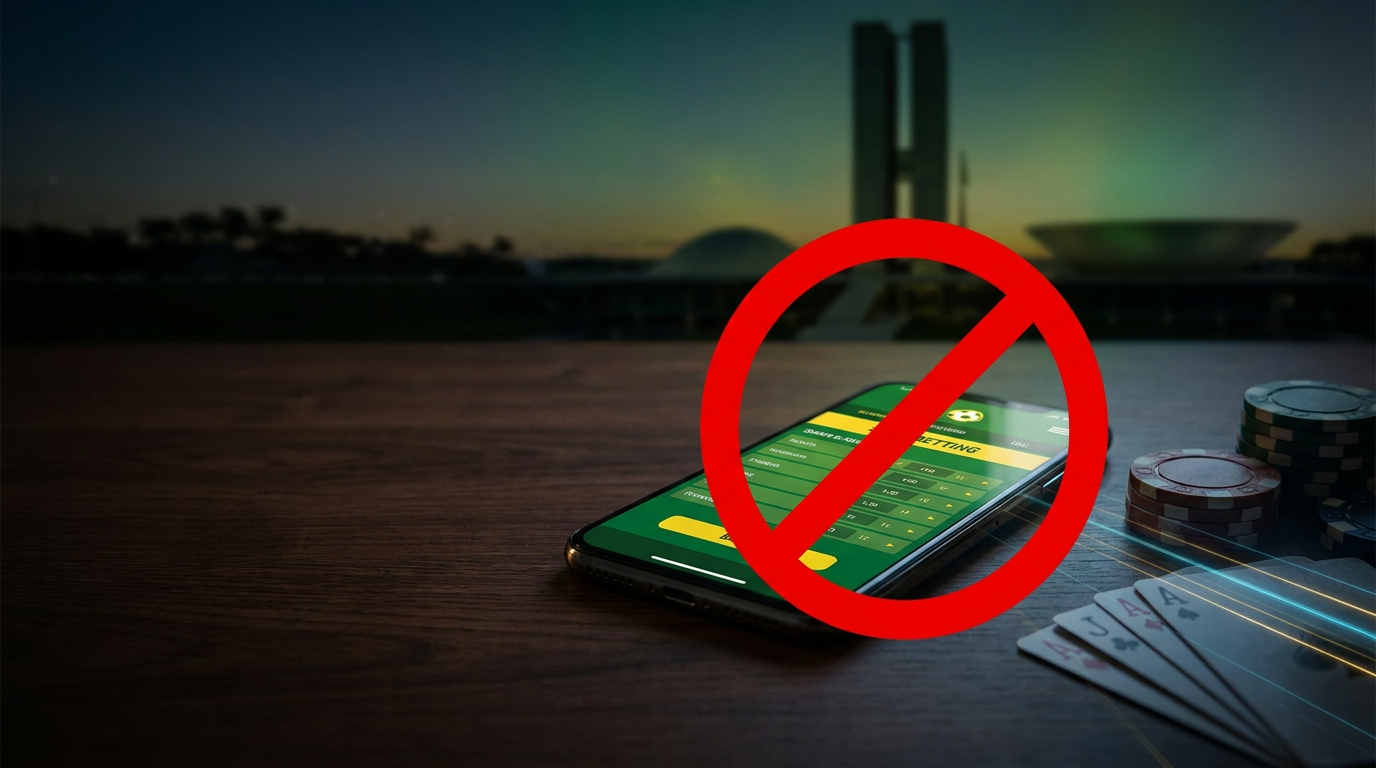
The Brazil betting ban has taken the iGaming industry by surprise. On 25 September 2026, President Luiz Inácio Lula da Silva signed Provisional Measure (MPV) 1394/2026, which prohibits both online sports betting and online casino gaming in Brazil. The regulated market it ends had opened for business less than two years earlier. Licensed sites must go offline on 6 October, the licences that operators paid millions for will be cancelled without compensation, and demand from one of the world’s largest betting audiences is about to lose its legal outlet. In this article, we look at what the Brazil betting ban means for licensing, why offshore operators, including those holding an Anjouan licence, are positioned to benefit, and what players should know before any money moves.
What the Brazil Betting Ban Actually Does
Brazil legalised fixed-odds betting in 2018 but only finished regulating it through Law 14,790 in December 2023. The federal licensing regime went live in January 2025. MPV 1394/2026 reverses that framework almost entirely. Under the measure:
- Deposits stopped immediately. Licensed operators can no longer accept new customer deposits, and new advertising contracts are banned with immediate effect.
- Players have until 5 October to withdraw. Bettors have been told to empty their accounts before the platforms close.
- Sites and apps go offline on 6 October. Existing sponsorship deals, including those with football clubs, become void from that date.
- Refunds run from 9 to 14 October. Operators must return any remaining balances through partner banks, with the state bank Caixa Econômica Federal stepping in after 14 October if needed.
- Licences are eliminated after 30 days. There is no reimbursement of authorisation fees and no government compensation.
Because it is a provisional measure, the ban took effect straight away but must be approved by Congress within 120 days to become permanent law. Legal observers currently expect it to pass. The government has also said it will send an urgent bill to Congress proposing criminal penalties: reports indicate four to six years in prison for running a betting site and two to four years for payment processors that facilitate gambling transactions.
Why Now?
The timing is political as well as social. The measure was signed nine days before the first round of Brazil’s presidential election on 4 October, in which Lula is seeking a fourth term. His government points to evidence linking the betting boom to household debt, citing around 1.8 million Brazilians who have fallen into debt and a disproportionate impact on welfare-dependent families. Reports put the amount flowing from Brazilian households to betting companies at more than R$60 billion a year.
The decision divided the government: days earlier, a casino-only compromise was reportedly on the table. The Finance Ministry had warned that a full prohibition could cost around R$12 billion in federal revenue in 2027. In the end, the broader ban prevailed.
What It Means for Gambling Licences in Brazil
For licensed operators, the Brazil betting ban is close to a worst-case scenario. Around 85 to 90 companies secured federal authorisation, each paying a fee of R$30 million (roughly US$5.7 to 5.8 million). Together they ran close to 200 authorised brands, including household names such as Betano, Superbet and Entain’s Sportingbet. Regulated firms paid an estimated R$8.7 billion in taxes and fees between January and July 2026 alone, and 2025 tax revenue came to almost R$10 billion.
Those licences are now effectively worthless. Operators face three immediate problems:
- Sunk costs. Licence fees, local incorporation, technology and compliance spending will not be refunded.
- Legal uncertainty. Industry groups, including the National Association of Games and Lotteries (ANJL) and the Brazilian Institute of Responsible Gaming (IBJR), have warned of significant economic and legal consequences. Legal challenges look likely, but their outcome is unclear.
- Marketing collapse. Thirteen of Brazil’s 20 top-flight football clubs carry betting sponsors. Clubs such as Flamengo have called the measure “a heavy blow to Brazilian sports”.
The wider lesson for the industry is that a licence is only as secure as the political climate around it. Operators across Latin America, and in other markets still debating regulation, will be watching Brazil closely. If you want to understand how licensing jurisdictions differ in the protections they offer, our guide to casino licences explained is a good starting point.
How Anjouan-Licensed and Offshore Casinos Stand to Benefit
Banning a product does not remove the demand for it. That is the central warning from Brazil’s regulated industry, which summed up its position as “to regulate is to control; to ban is to lose control”. Even before the ban, the IBJR estimated that illegal operators held around half of Brazil’s betting market, and warned that share could rise to 60% after tax increases on licensed firms. With the licensed sector now switched off, most of that demand has nowhere legal to go.
Why the Anjouan Licence Is in the Spotlight
The Anjouan licence, issued by the Anjouan Gaming Authority in the Union of Comoros, has become one of the most popular entry-level offshore licences since Curaçao tightened its regime under the National Ordinance on Games of Chance (LOK). Its appeal to operators is mainly commercial:
- Low cost: an annual fee of around €17,800, far below Brazil’s R$30 million authorisation.
- Speed: approval typically takes four to eight weeks.
- No GGR tax: 0% tax on gross gaming revenue.
- Crypto-friendly: many Anjouan-licensed brands accept cryptocurrency, which is harder for national payment blocks to reach.
From a purely economic point of view, offshore brands with this kind of cost base are well placed to pick up Brazilian traffic that licensed operators can no longer serve. They pay no Brazilian tax, face none of the advertising restrictions, and many already offer Portuguese-language sites and crypto payments. That is why analysts expect the grey and black markets to be the biggest short-term beneficiaries of the Brazil betting ban.
The Risks Offshore Operators Face
Offshore operators will not have an easy run, however. Serving Brazilian players after 6 October will be illegal, and the proposed criminal penalties target operators and payment processors directly. The government has set up an inter-agency committee to coordinate enforcement, and financial institutions are barred from processing gambling transactions other than refunds.
Enforcement capacity is the open question. Brazil’s telecoms regulator, Anatel, says it has blocked more than 15,000 illegal betting sites since the regulated market launched, but it has also been reported to lack the funding and staff needed to keep up. Anjouan licences also carry lower recognition with banks, payment providers and major B2B suppliers, which limits how easily these brands can process fiat payments at scale. In short, offshore casinos may gain market share, but they will be operating under a much higher legal risk than before.
What the Ban Means for Players
For Brazilian players, the most urgent step is practical: withdraw any balances from licensed sites before the 5 October deadline, or keep track of the refund process that runs from 9 to 14 October.
Beyond that, the bigger risk is where players go next. An offshore site with an entry-level licence does not offer the same protections as a regulated local operator. Complaint handling, deposit limits, self-exclusion tools and fund segregation can all be weaker or missing, and a player in dispute with an unlicensed operator has very limited recourse. Choosing a site that accepts players from a country where online gambling is banned may also expose players to legal and payment problems. Our guide on how to check if an online casino is safe explains what to look for in any operator.
For UK players nothing changes directly, but the Brazil betting ban is a reminder of why regulation matters: stick to operators licensed in your own jurisdiction and choose fair, transparent casino bonuses from sites you can hold to account.
Frequently Asked Questions
Is online betting now illegal in Brazil?
Yes. Provisional Measure 1394/2026, signed on 25 September 2026, bans online sports betting and online casino gaming. Licensed sites must go offline by 6 October 2026. Congress has 120 days to confirm the measure as permanent law.
What happens to money left in Brazilian betting accounts?
Players were asked to withdraw funds by 5 October 2026. Operators must refund remaining balances between 9 and 14 October, after which the state bank Caixa Econômica Federal can step in to manage refunds.
Will licensed operators get their licence fees back?
No. The measure eliminates federal authorisations 30 days after publication, with no reimbursement of the R$30 million fee and no government compensation.
Can Anjouan-licensed casinos legally accept Brazilian players?
No. An Anjouan licence does not authorise operating in Brazil, and under the ban it is illegal to offer online betting or casino games to Brazilian players. The government is also proposing criminal penalties for operators and payment processors.
Could the Brazil betting ban be reversed?
It is possible but currently considered unlikely. Congress could reject or amend the provisional measure within 120 days, and legal challenges from operators are expected. The result of the 4 October election may also shape what happens next.
The Bigger Picture
The Brazil betting ban is one of the most dramatic regulatory reversals the iGaming industry has seen, leaving billions in demand without a legal home. Offshore brands, including Anjouan-licensed casinos, look set to gain in the short term, but much depends on enforcement and on Congress. Explore our latest iGaming news and casino reviews to stay up to date with the markets that matter to you.
Responsible Gambling: Gambling should be enjoyed as entertainment.
If you feel your gambling is becoming a problem, please visit
BeGambleAware.org
for free support and advice.

About the Author
Alex ThomasAlex brings 10+ years of iGaming experience and a sharp editorial eye. He's the brain behind ZeroWagerBonus’s tone, SEO growth, and bonus strategy—always with one question in mind: “Would I play this offer myself?”
View All Articles